


Making a complex regulator easier to navigate
Over several years I helped the Therapeutic Goods Administration (TGA) transform how people find health and regulatory information and interact with its digital services, from rebuilding its public website to defining a more connected vision for online services.
The work spanned experience strategy, research, information architecture, service design, prototyping, usability testing and delivery within a large and highly regulated digital ecosystem.
Year
2021-26
Client
Therapeutic Goods Administration, Department of Health, Disability and Ageing
Role
Lead experience designer
Contribution
Experience strategy • Information architecture • Service design • Product design
A digital front door for very different users
The challenge
The TGA serves people with very different levels of knowledge, urgency and familiarity with regulation.
Experienced industry users may visit frequently and need to reach detailed technical information or online services quickly. Health professionals may arrive with a specific patient-related task and very little time. Members of the public may visit only once, often with limited knowledge of the regulatory system and without knowing exactly what they need to look for.
COVID-19 made that tension even more visible as millions of Australians increasingly looked to the TGA as a trusted source of health information.
Our research showed that even within industry, needs varied significantly. 82% of organisations managed ten or fewer regulated products, while just 1.3% managed more than 100. Some infrequent users could effectively become a “first time user, every time”, while experienced regulatory teams needed speed, certainty and access to deep technical information.
The challenge was to create an experience that could orient unfamiliar users, support time-poor health professionals and still let expert users move quickly into specialised information and services.
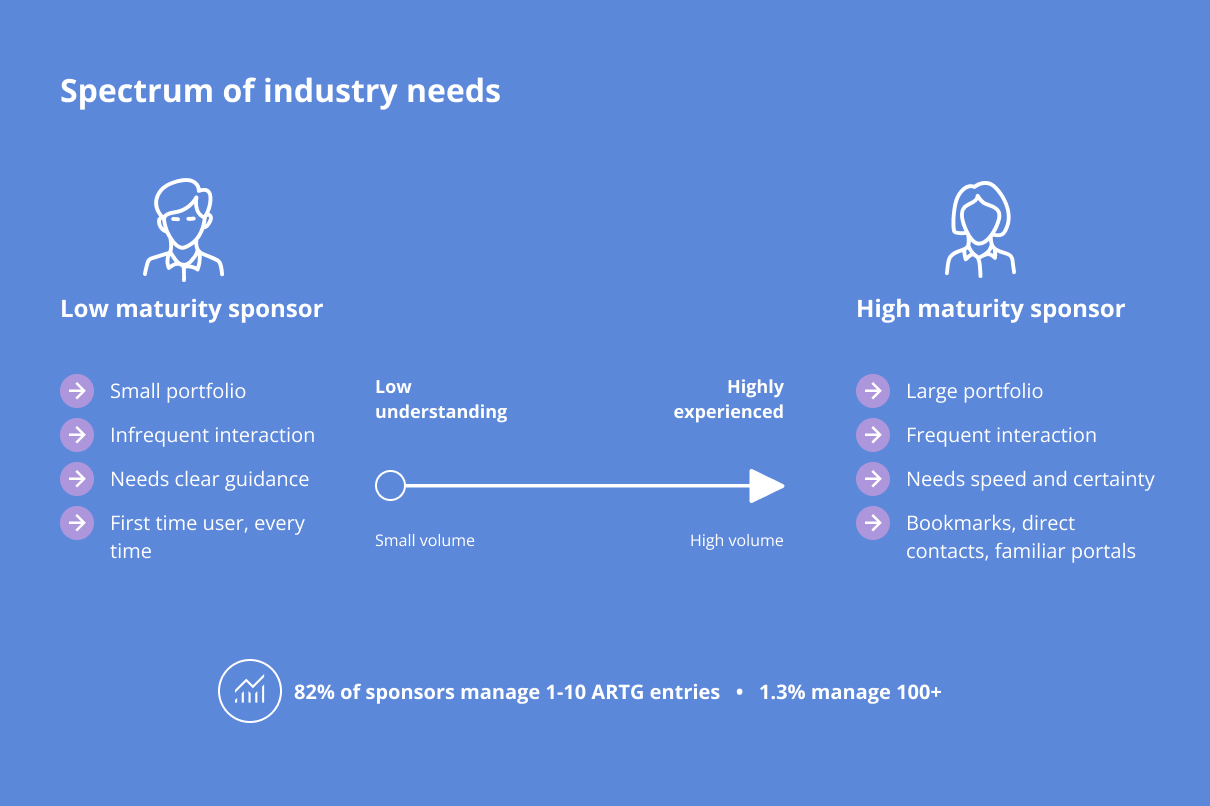
One industry audience, very different needs
Rebuilding the foundations
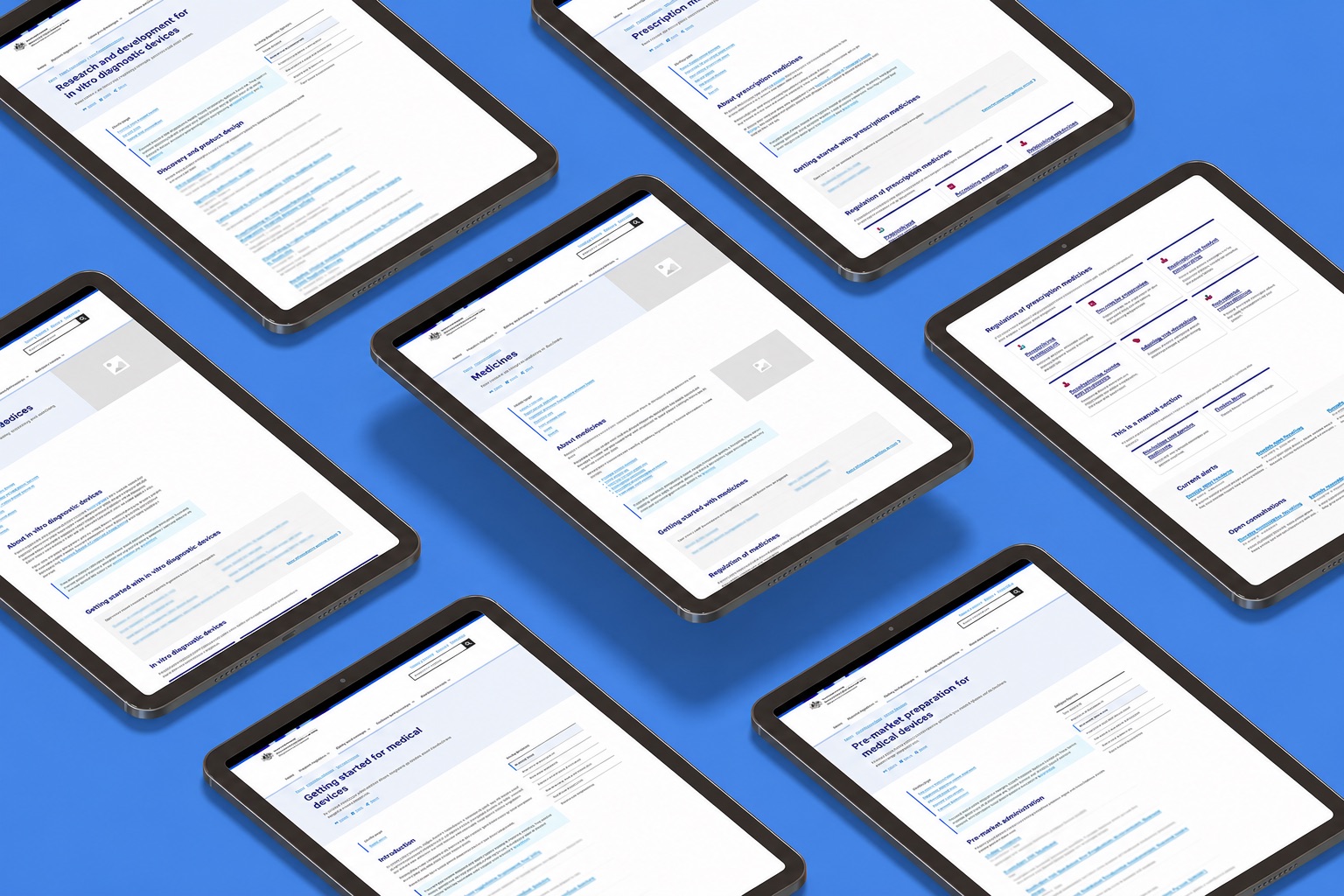
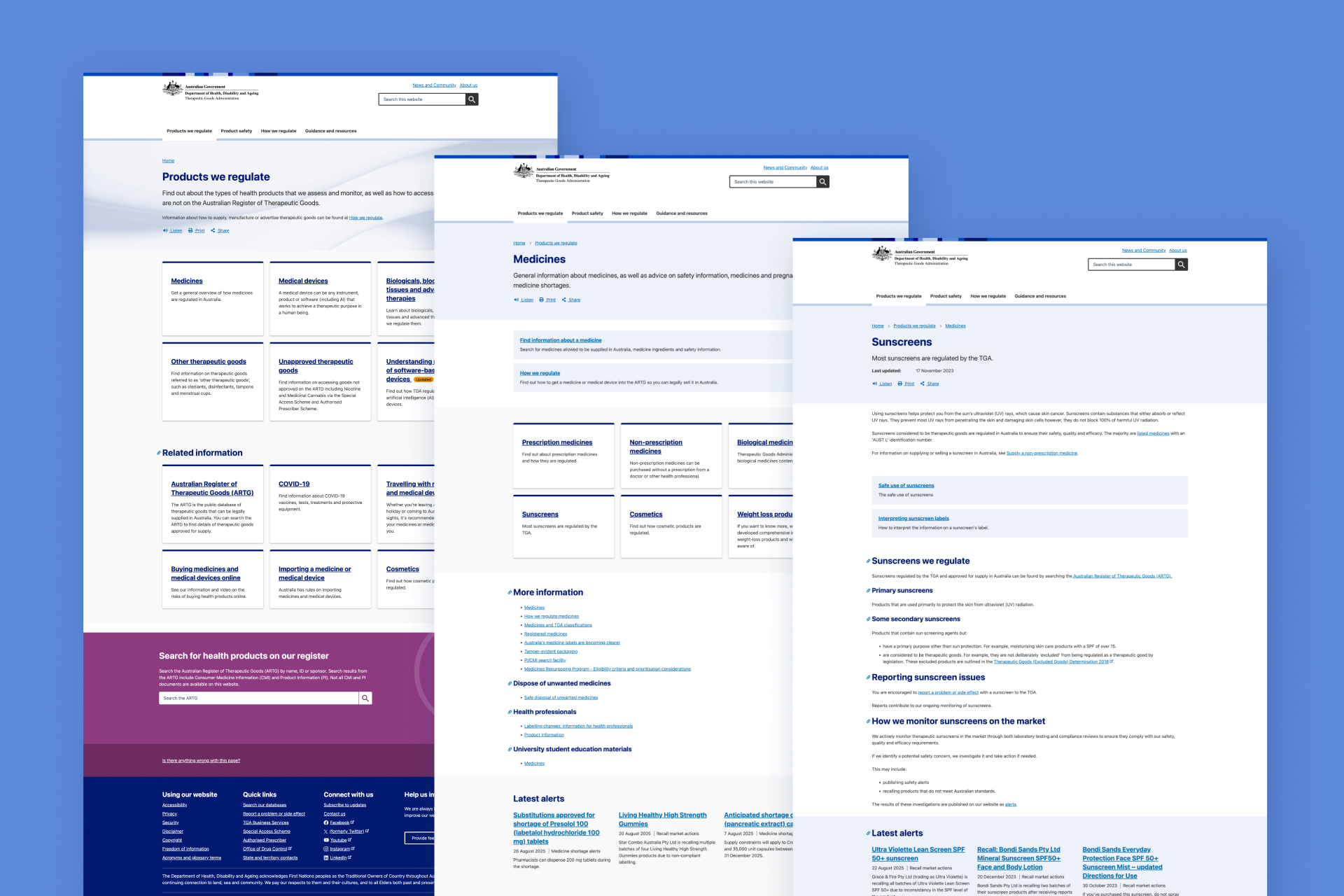
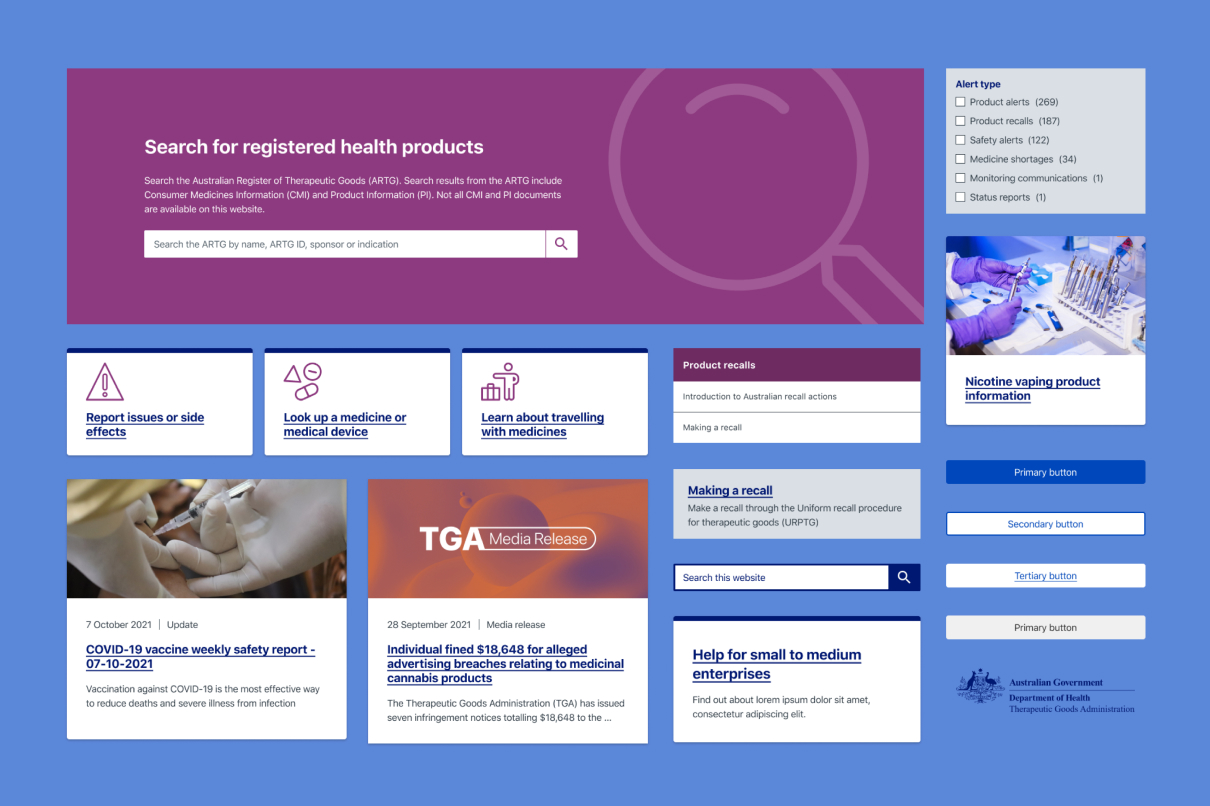
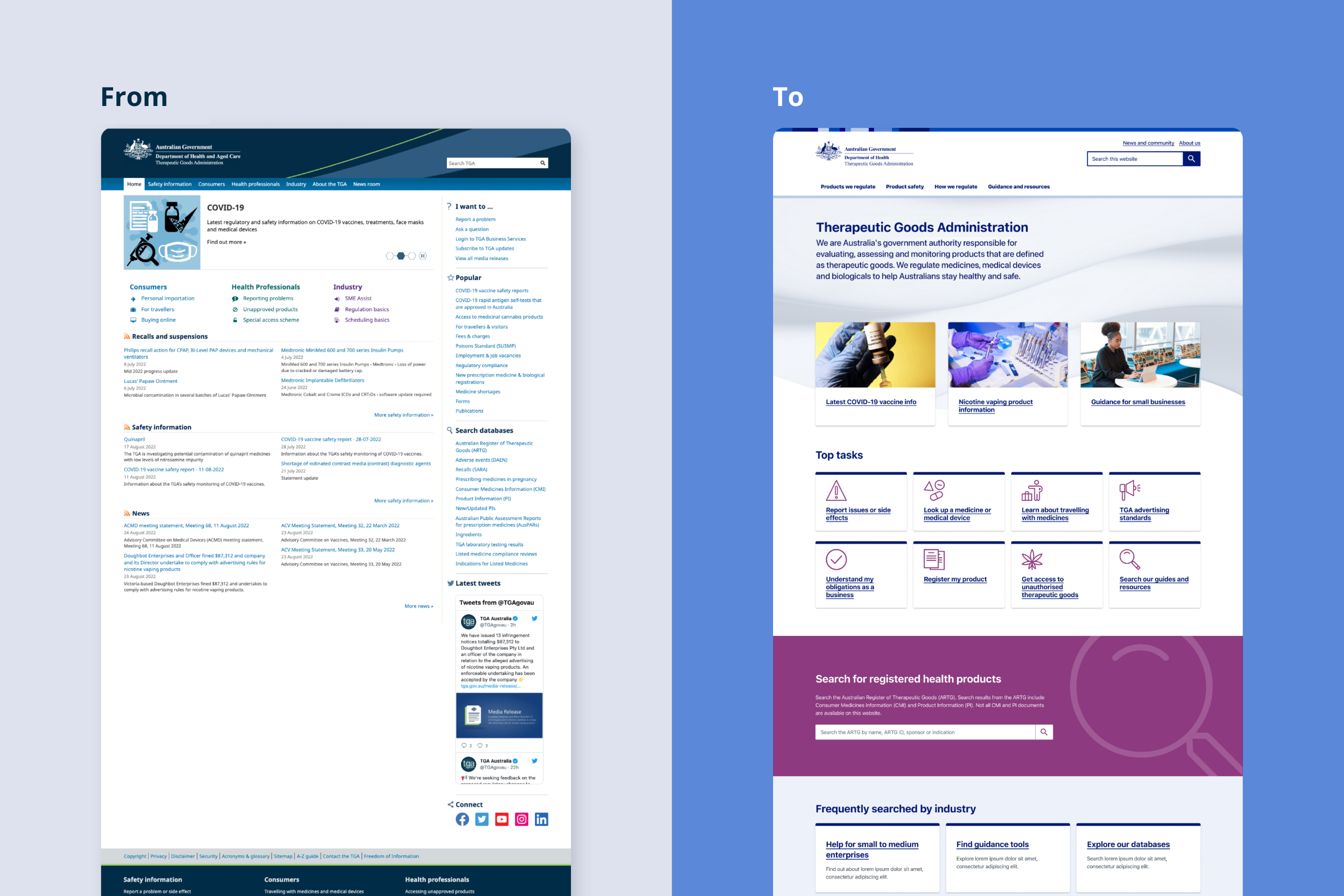
I led experience design for the transformation of tga.gov.au, working across research, content strategy, UI design and development.
Audience models helped establish a shared understanding of the very different needs of consumers, health professionals and industry users, from occasional visitors looking for reassurance through to specialists managing complex portfolios of regulated products.
An ecosystem map made the wider system visible, showing how people moved between websites, databases, portals and services that internally belonged to different teams but externally were all experienced simply as “the TGA”.
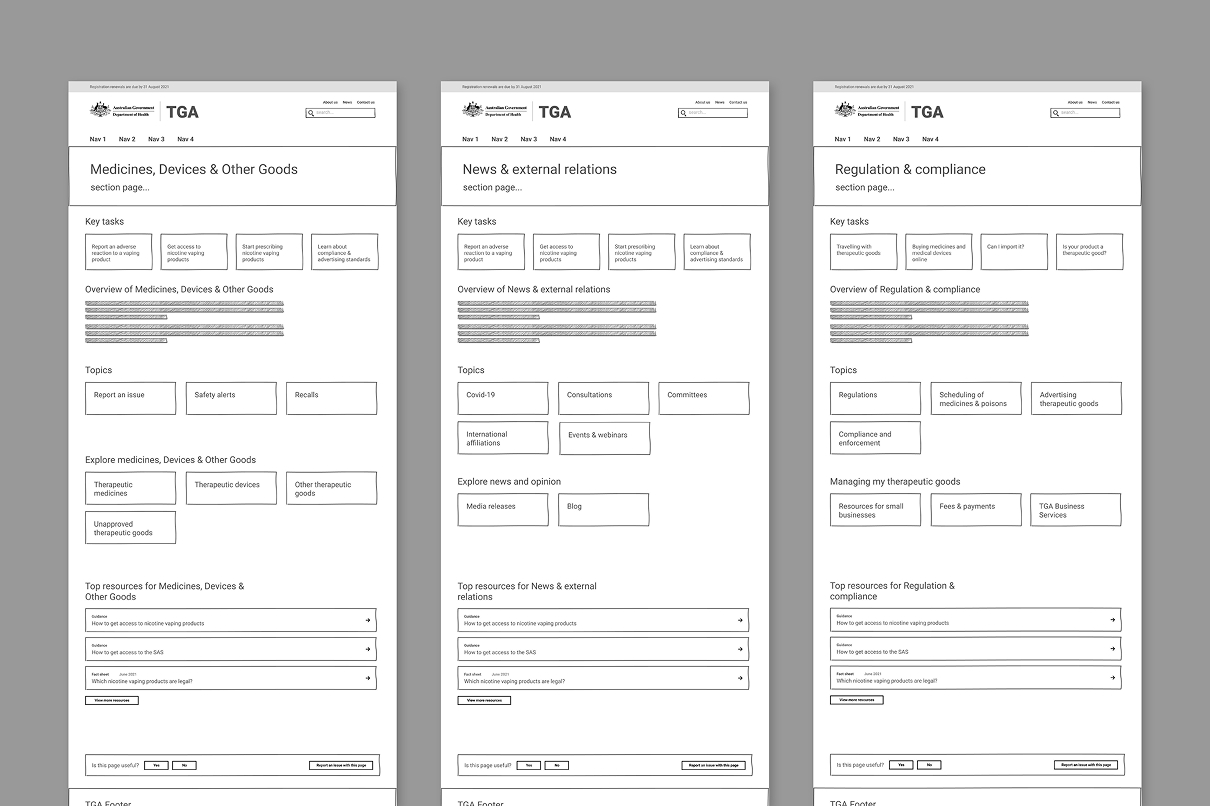
Working closely with a content strategist and our development partner, we defined the information architecture, content model and core experience patterns, while I led prototyping and usability testing through to implementation.
The program ultimately migrated more than 112,000 content items, replacing a large legacy estate with a more consistent digital foundation.
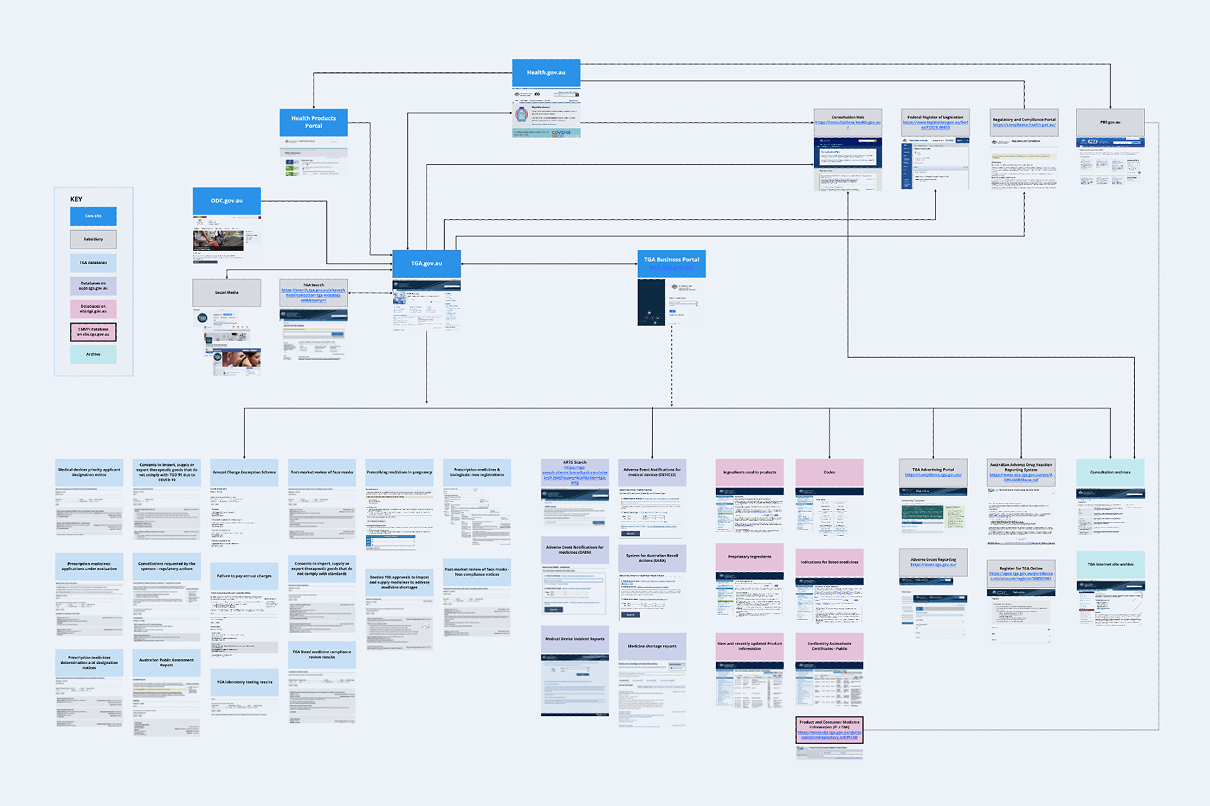
Making the wider TGA ecosystem visible
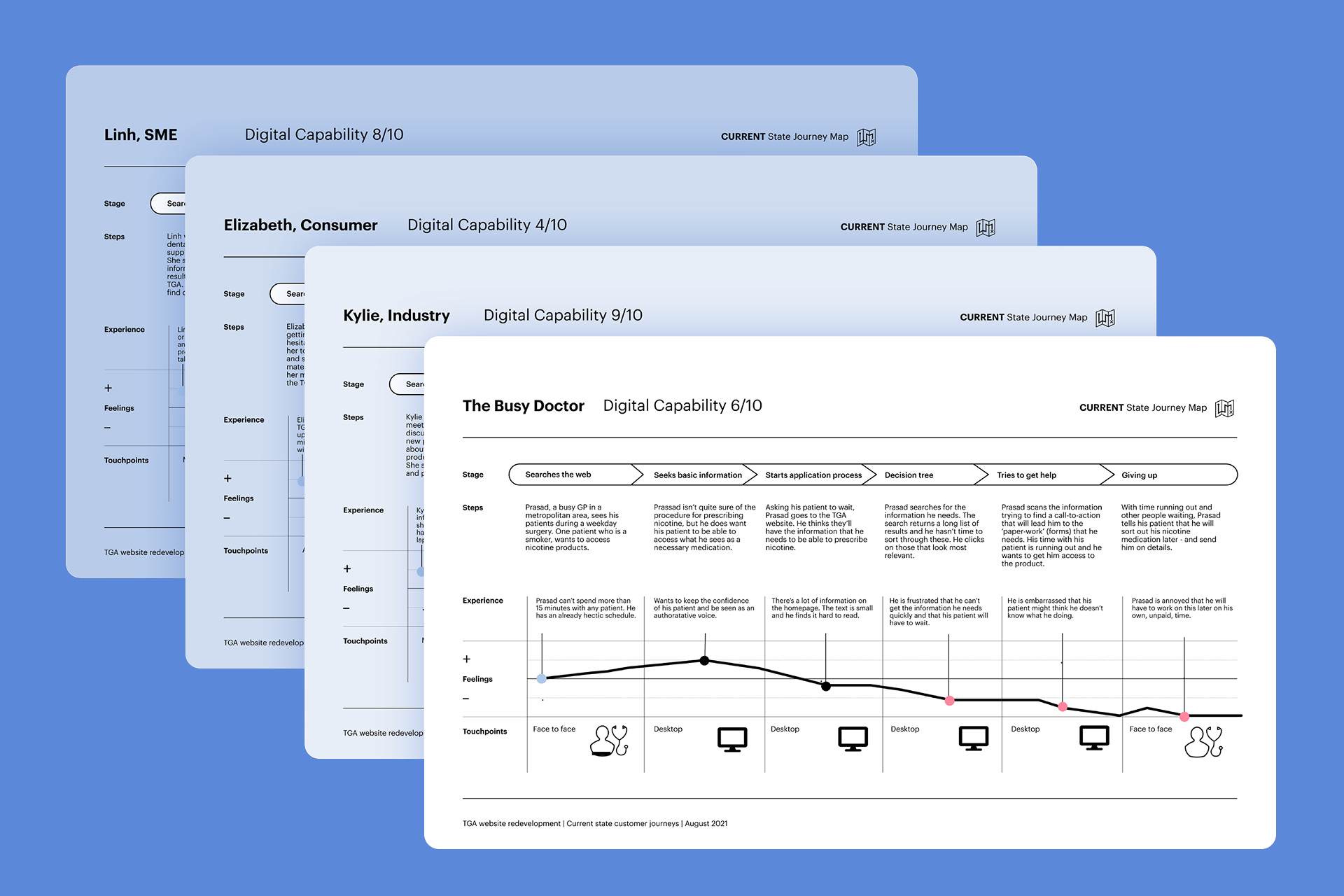
Tracing where users struggled and dropped out
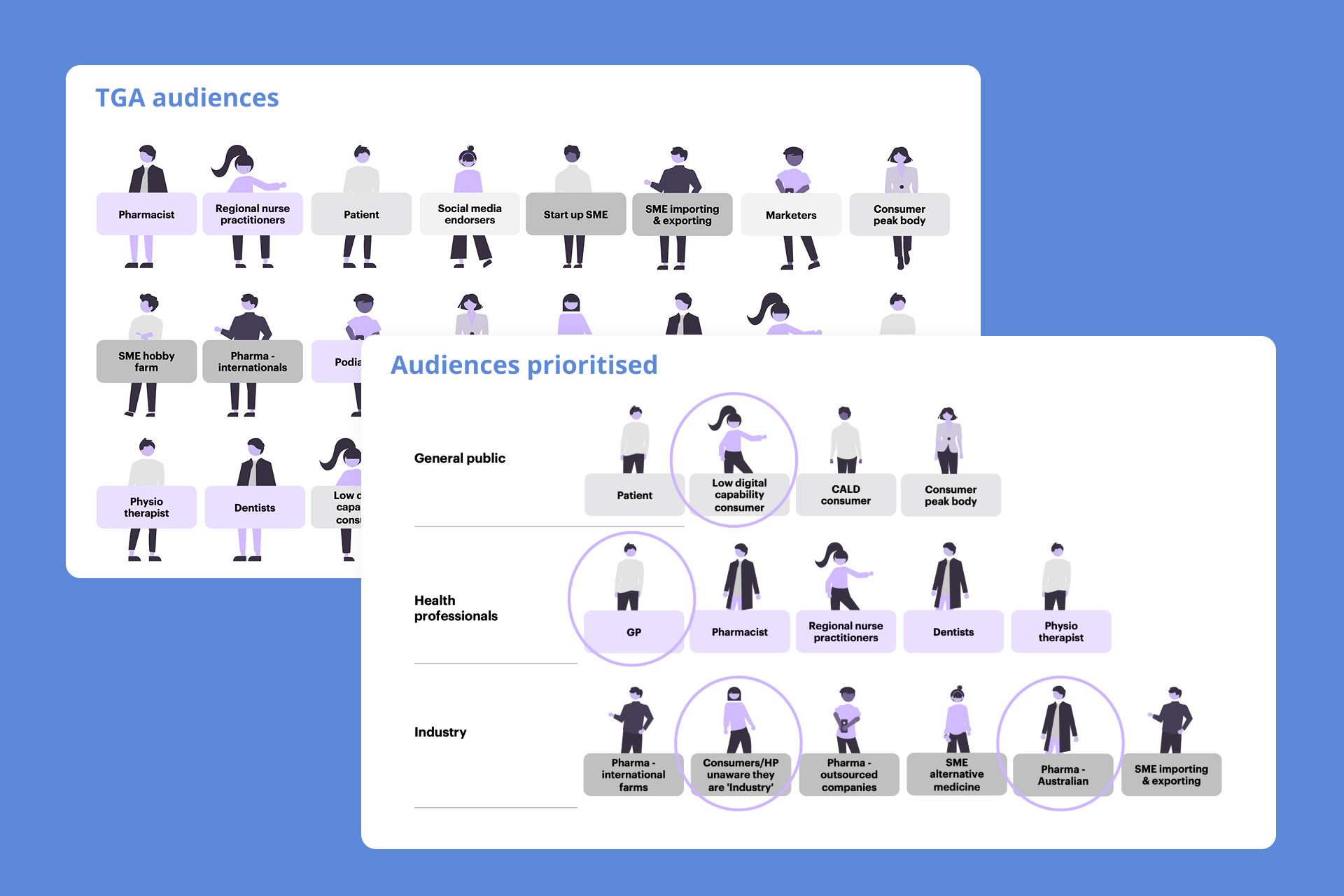
Turning broad audiences into clearer design priorities
Connecting the wider TGA experience
Our earlier research had already highlighted a broader challenge. Users were continually moving between public information and logged-in services to complete the same task.
Research identified more than 1,100 links from the TGA website into the existing online service platform, reinforcing that information and transactions were already deeply connected.
As part of the wider transformation program, we were asked to define a future experience for the TGA's online services. The initial brief focused on a new portal for industry, but during discovery we broadened the lens to consider the end-to-end experience across websites, online services, reporting tools and enquiry channels.
I led the future service experience work, collaborating closely with the client and a multidisciplinary team across research, strategy, content and design.
Our research highlighted four principles for the future experience:
One size won't fit all
Support different levels of experience and frequency of use.
Joined-up services
Connect information and services rather than exposing organisational silos.
Self-service and automation
Help users identify the right service and complete tasks with confidence.
Centralised communication
Give users better visibility of status, advice and interactions.
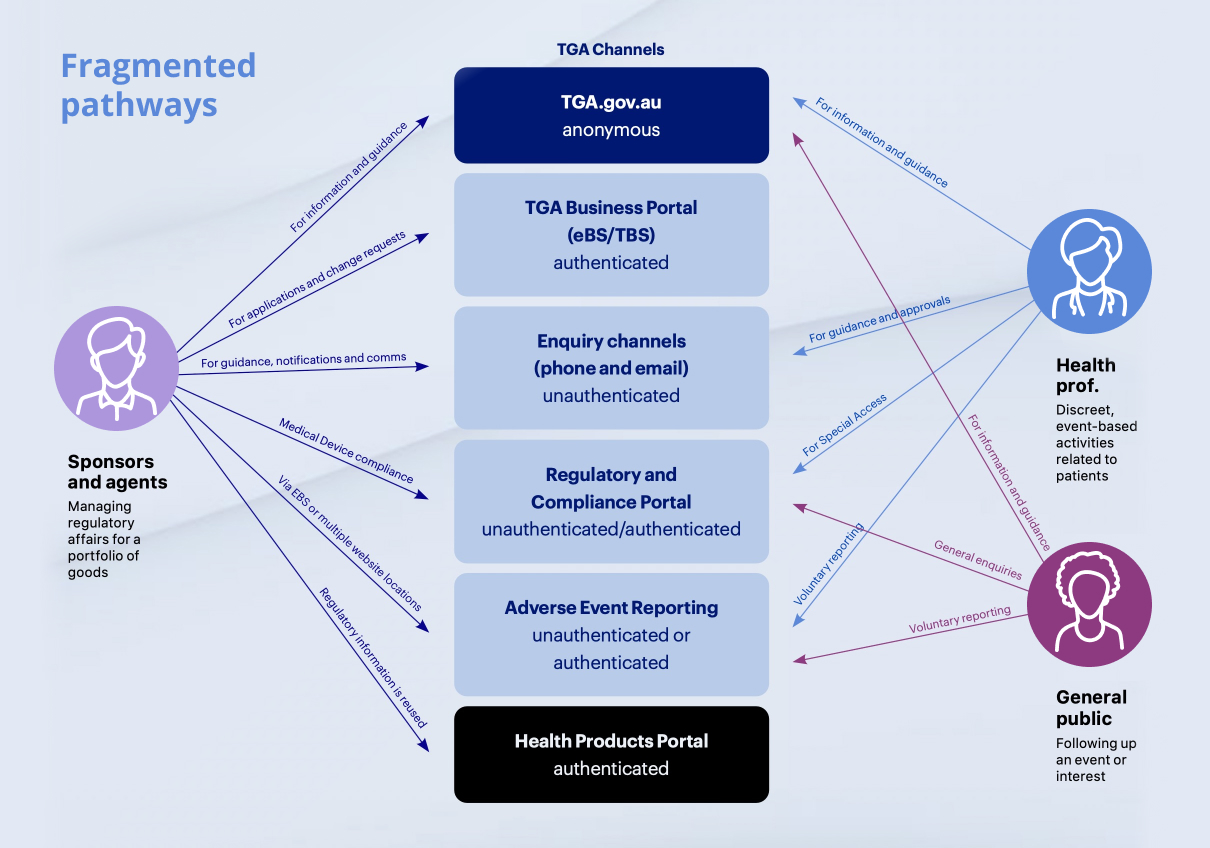
Showing how different audiences moved between TGA services
Making the future tangible
We developed an interactive future-state prototype to show what those principles could mean in practice, exploring a more connected experience across information, applications, account and portfolio management, communication and service status.
The prototype turned an abstract service strategy into something stakeholders could see, test and respond to, helping establish the direction for the TGA's emerging online services platform.
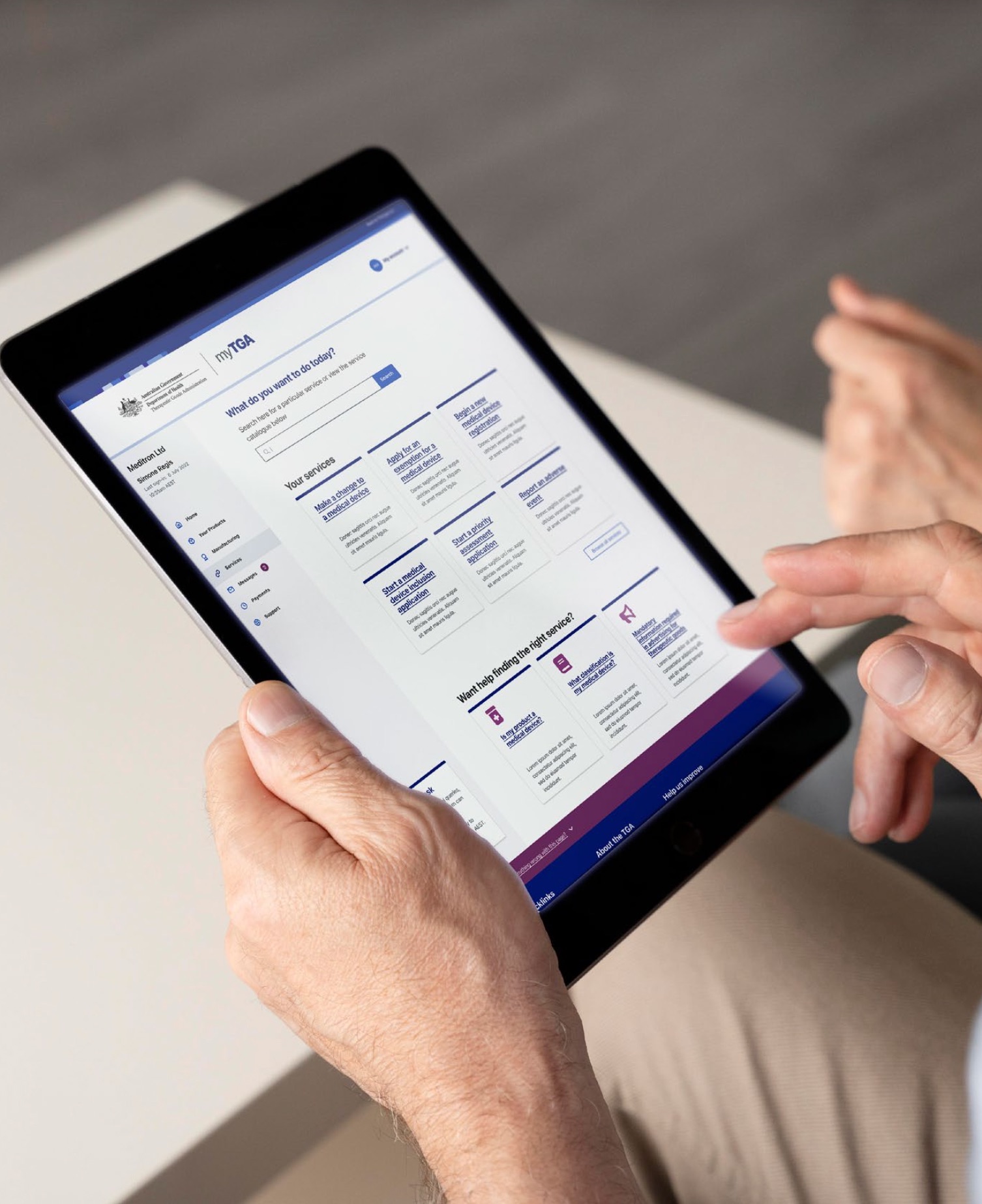

Bringing the future-state vision to life
Improving the information underneath
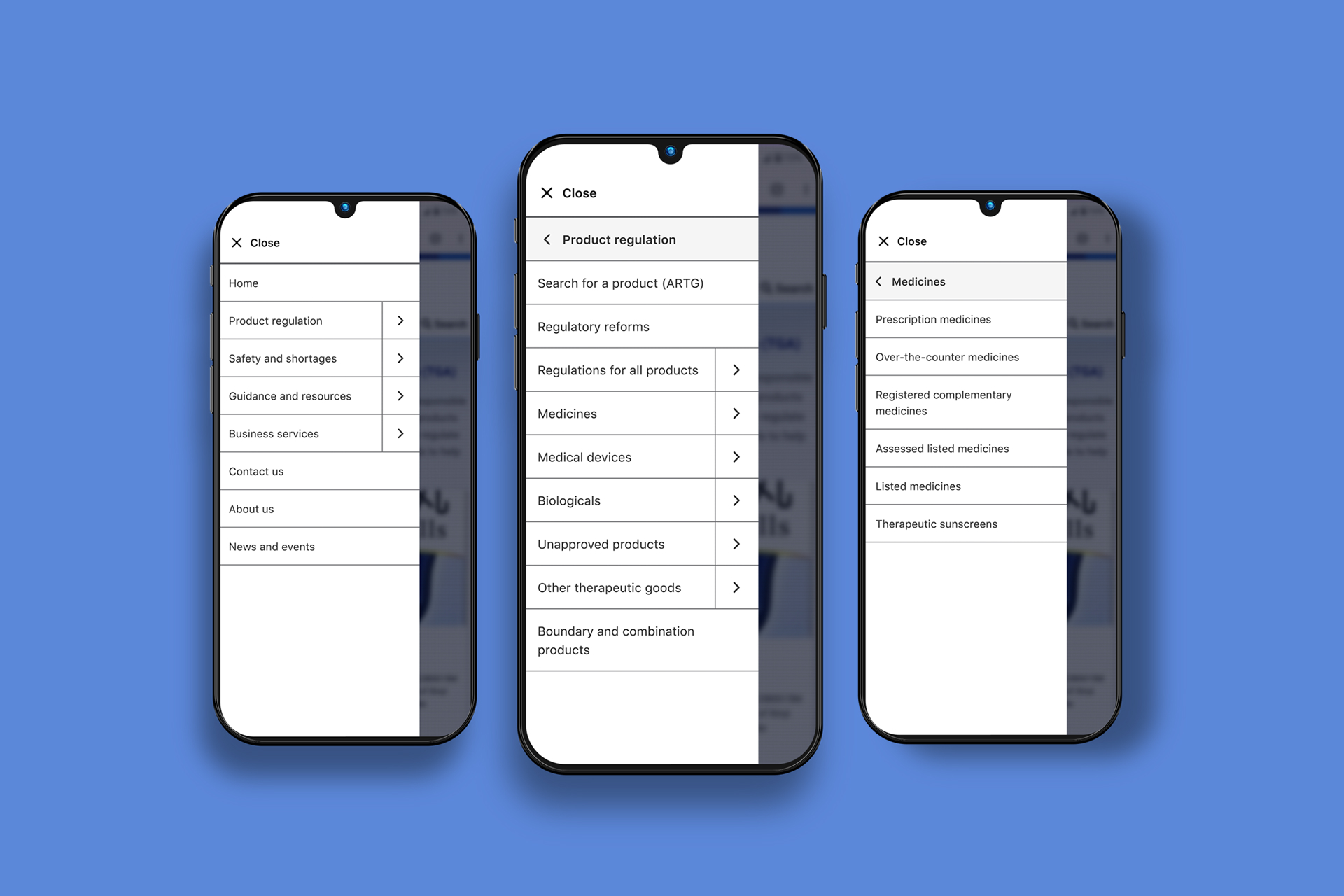
Later projects focused on improving the information underneath the experience, including complex regulatory content, search and information architecture. I developed interaction design and ran usability testing for the Guidance and Search work, contributing to the broader research and structure, and helping move the TGA away from static documents towards more structured web content that was easier to search, maintain and connect to relevant tasks.
In 2025, I worked with the wider team on a further information architecture enhancement, developing prototypes and running one-to-one testing while structural changes were tested at scale. The work reinforced an important lesson from the original transformation: good information architecture depends on good governance. Without clear ownership, duplication and complexity can gradually return.
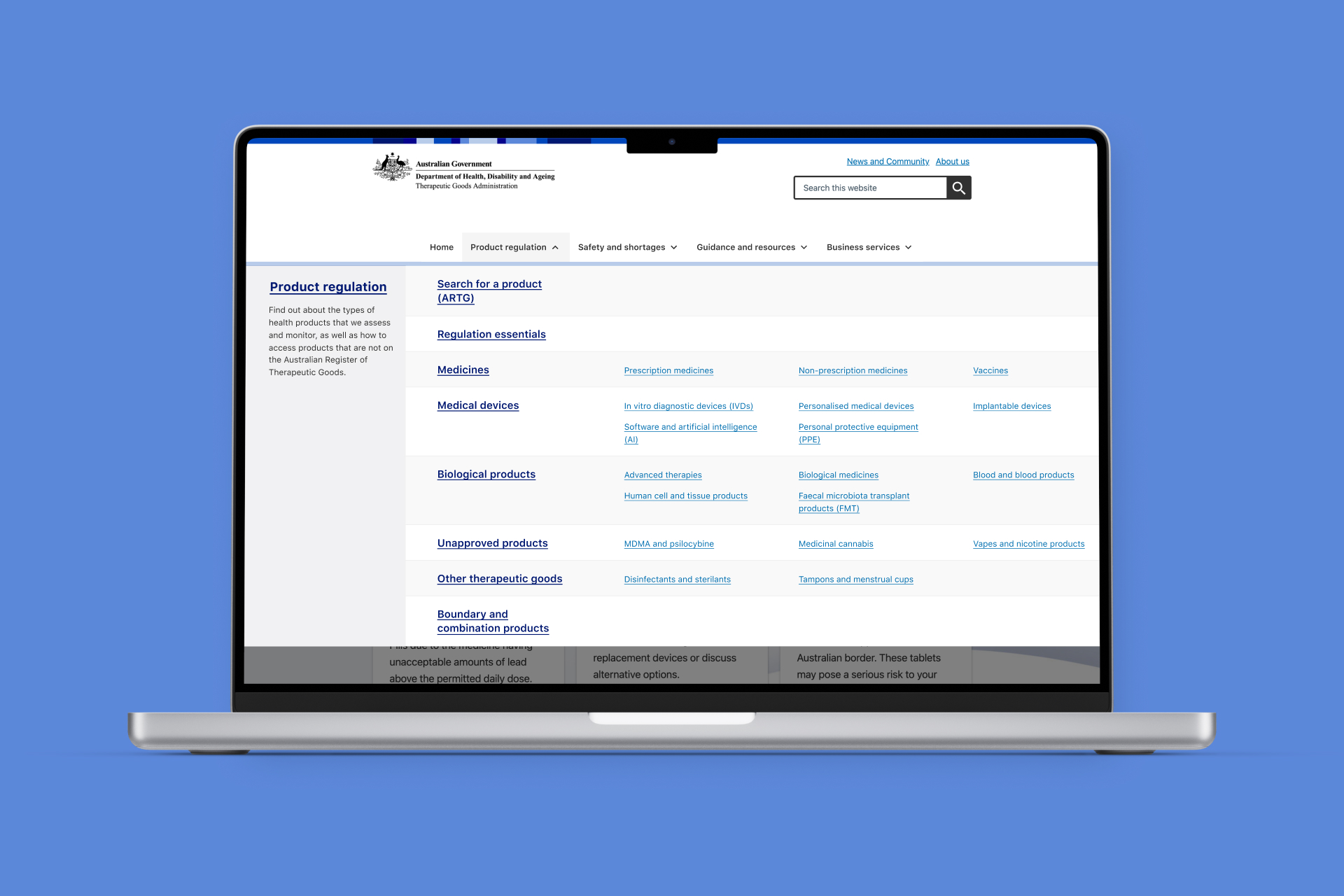
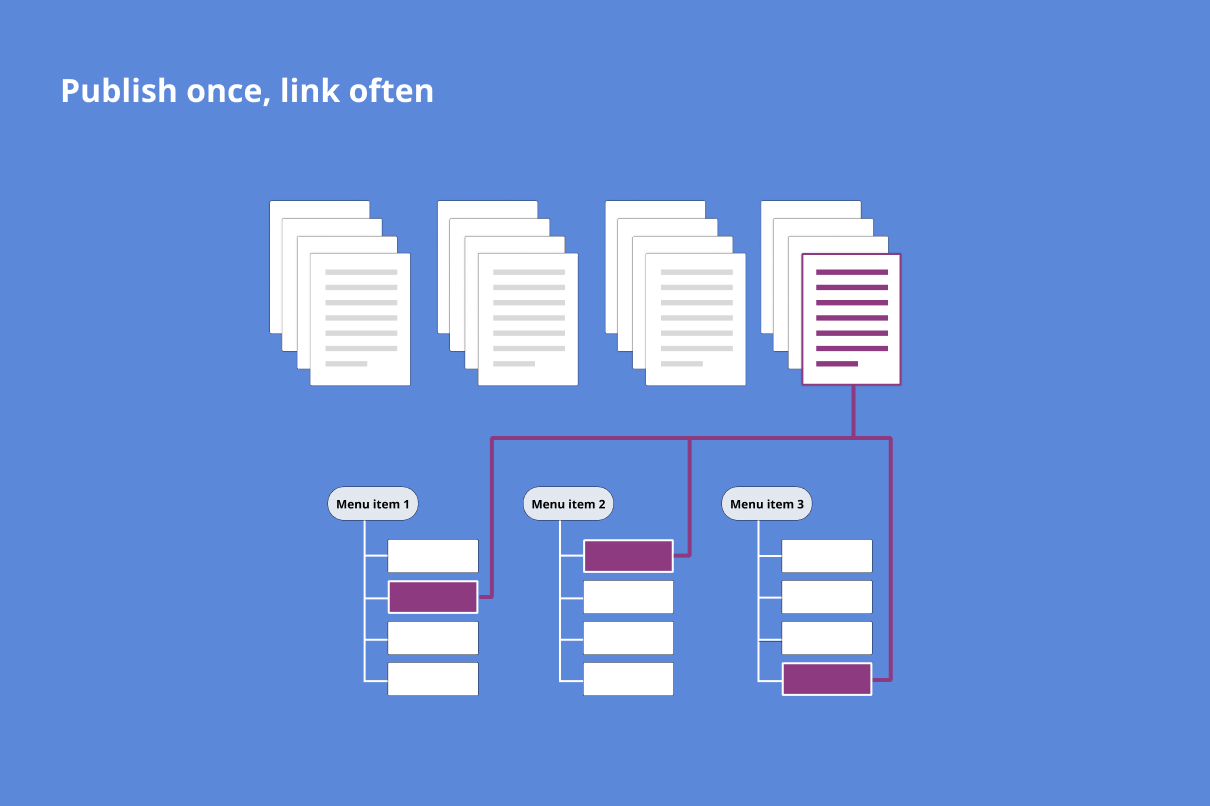
Structuring content for easier reuse and navigation
Continuing to improve
As the TGA began rolling out its new online services platform, we continued to provide independent usability testing and experience-design recommendations.
This gave us an unusual opportunity to see how the experience evolved over time, compare implementation against years of research and identify where new decisions were introducing friction or moving away from the original experience principles.
Rather than treating transformation as a one-off redesign, we could continue testing assumptions, learning from what happened after launch and refining the experience as the organisation changed.
The outcome
Across the program, the work helped the TGA:
- launch a completely transformed public website
- create clearer pathways for consumers, health professionals and industry
- support both infrequent and highly experienced users
- restructure a very large and fragmented content estate
- establish shared models of audience needs and behaviour
- move towards more connected digital services
- help shape the direction for its emerging online services platform
- improve how complex regulatory information is structured, searched and maintained.
The most valuable part of the work was being involved long enough to see how the experience evolved after launch.
Over time, the work expanded beyond individual interfaces into the structures behind them, connecting people, information, services and technology to help make a complex regulator easier to navigate.
“It was easy to access the information and resources that I was looking for… [this] would be an easy, comfortable way to find the right information.”
Medicines industry participant
More work


