

Simplifying a complex conservation system
I led the experience design of a new reporting product for Saving our Species, NSW Government’s threatened species conservation program. Used by more than 800 staff and 20 partner organisations, we untangled complex workflows and legacy processes to create a clearer way to plan, manage and report conservation work.
Year
2025
Client
NSW Department of Climate Change, Energy, the Environment and Water
Role
Lead experience designer
Contribution
Product design • Experience design • Service design • Design direction
Simplifying complex conservation work
The challenge
Saving our Species relied on a complex application supporting planning, project management and reporting across different teams and roles. Years of accumulated processes had created repetitive workflows, inconsistent data entry and limited visibility of project status, while legacy systems constrained what could change.
The opportunity was to create clearer, more consistent pathways through this complexity, reducing administrative effort and giving conservation teams more time to focus on their work in the field.
Making sense of the system
I led discovery across a complex network of users and stakeholders, combining two current-state walkthroughs, six stakeholder and SME consultations, analytics and technical discovery with workflow mapping across the program.
We combined the program’s existing process models with user journeys to understand the relationships between people, tasks, information and underlying systems. This exposed duplication, hand-offs and dependencies that were not always visible across individual teams, and gave us a shared model for deciding what could be simplified.
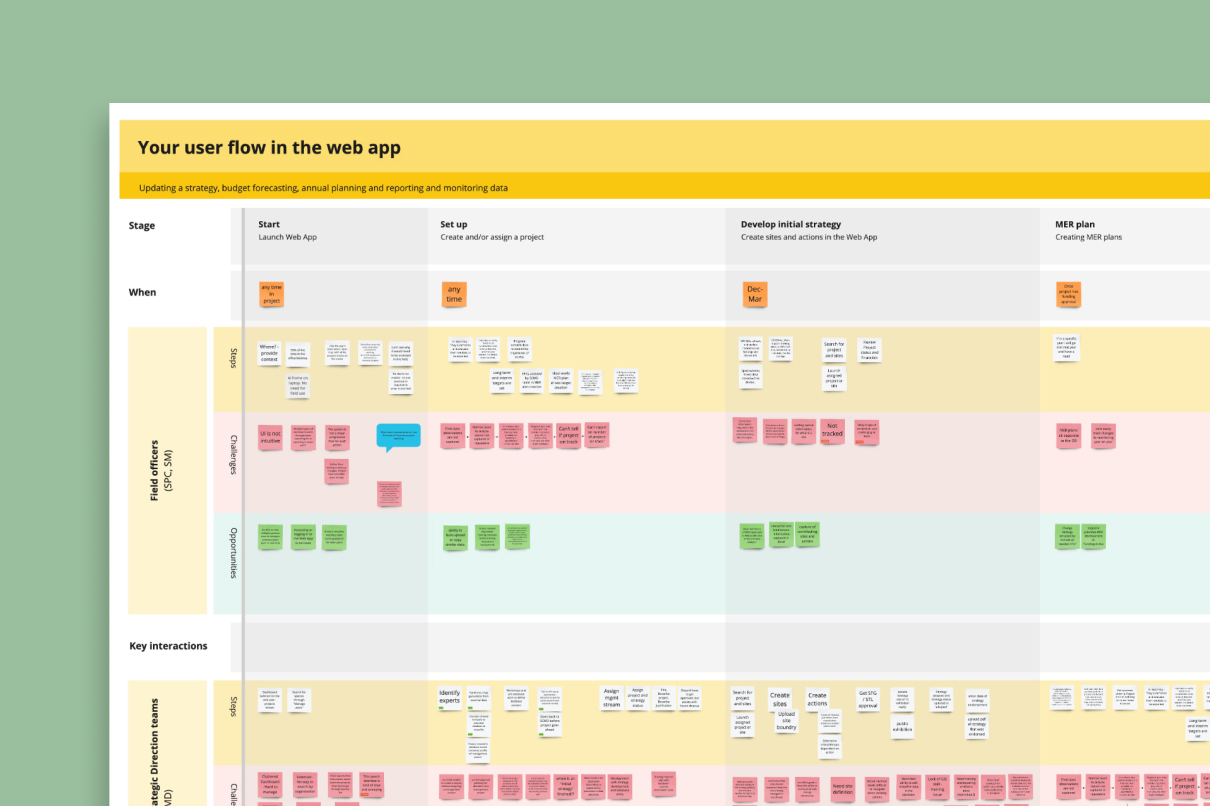
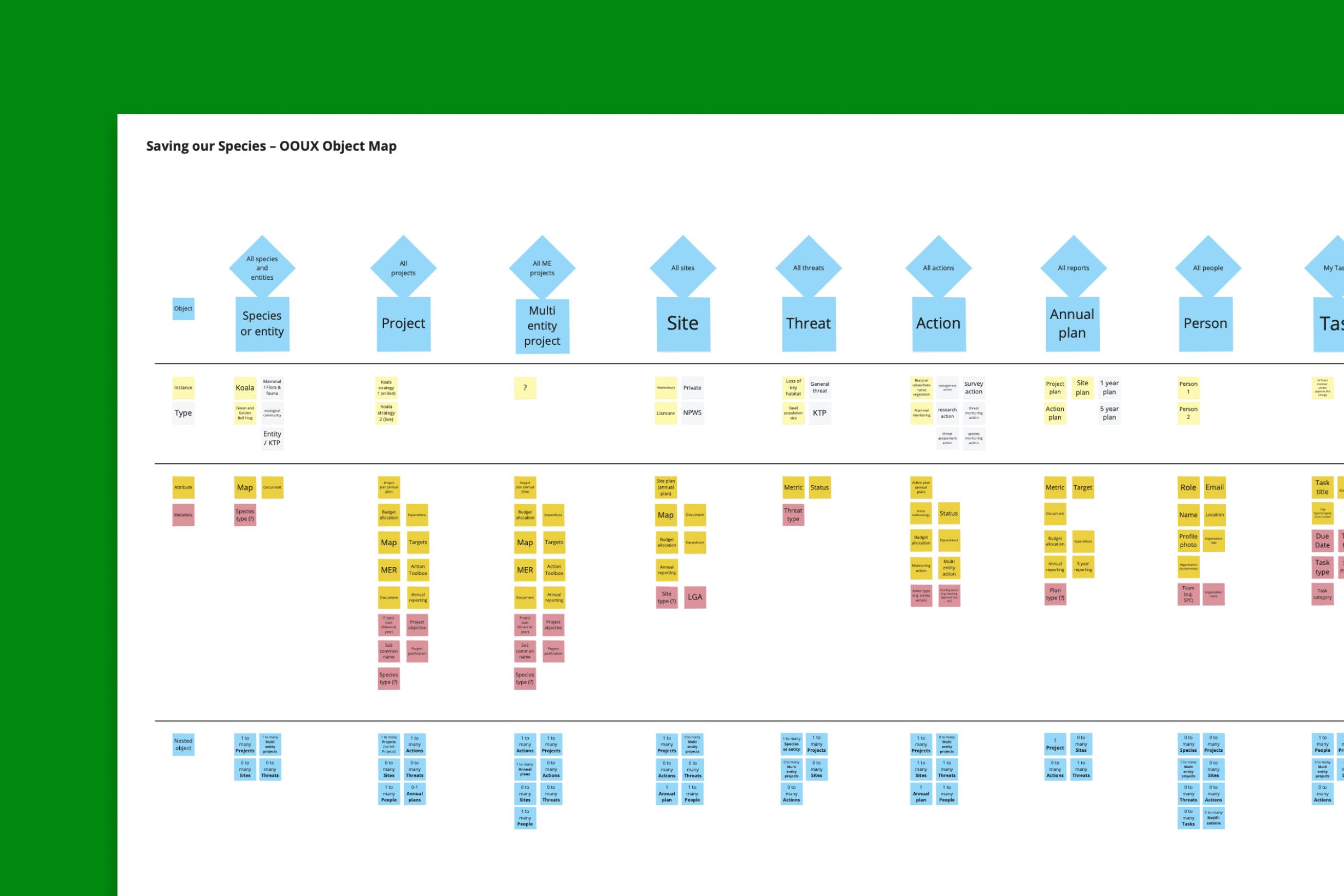
Understanding the processes and relationships through journey and system mapping
Turning complexity into a clearer product
I used this shared understanding to lead the development and iteration of a new information architecture and simplify the core journeys.
As our understanding evolved through consultation and testing, we continually refined the structure rather than treating the existing processes as fixed.
The new IA was validated with 32 users through tree testing.
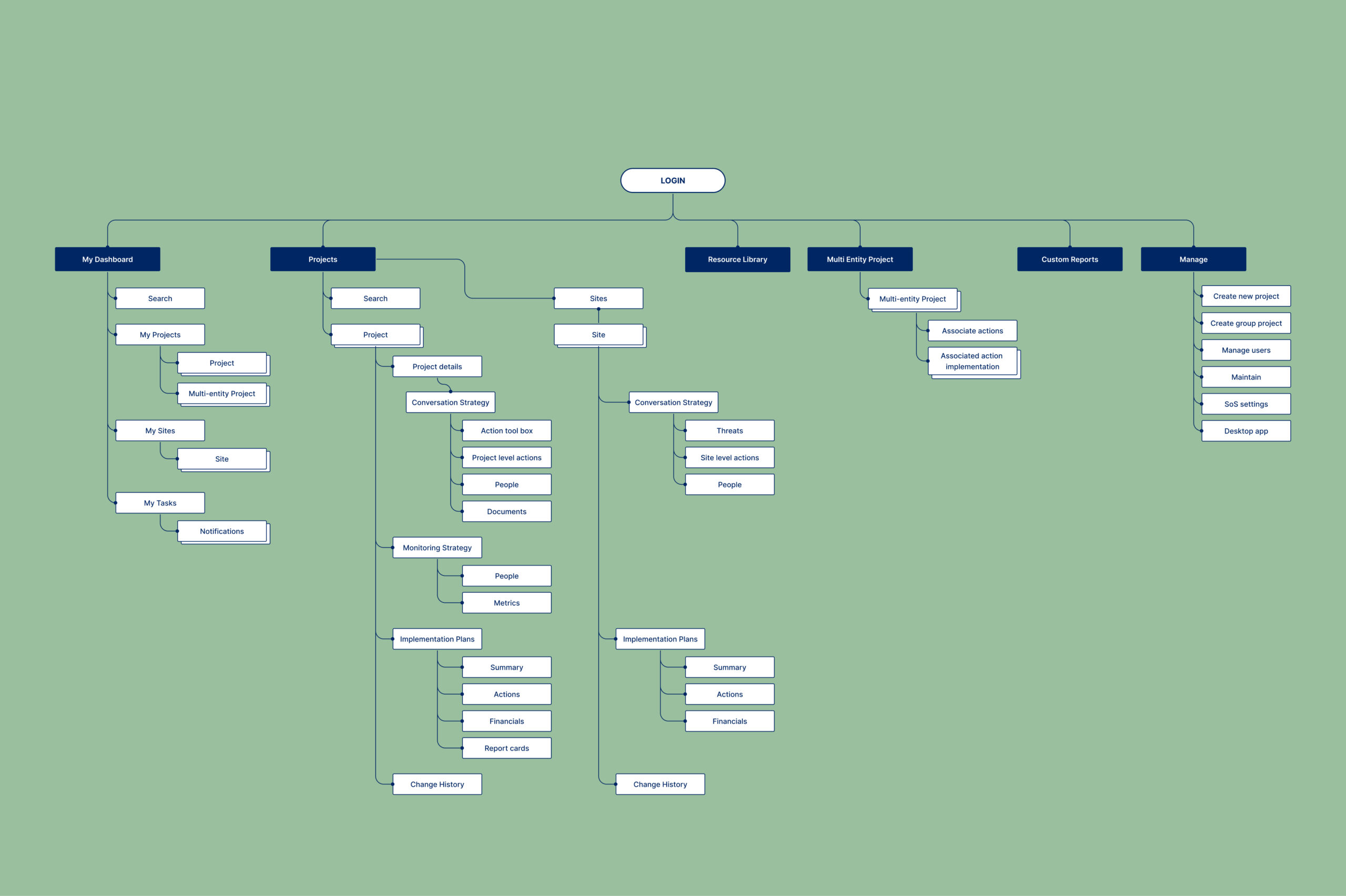
Structuring the product around clearer pathways and relationships
More consistent reporting
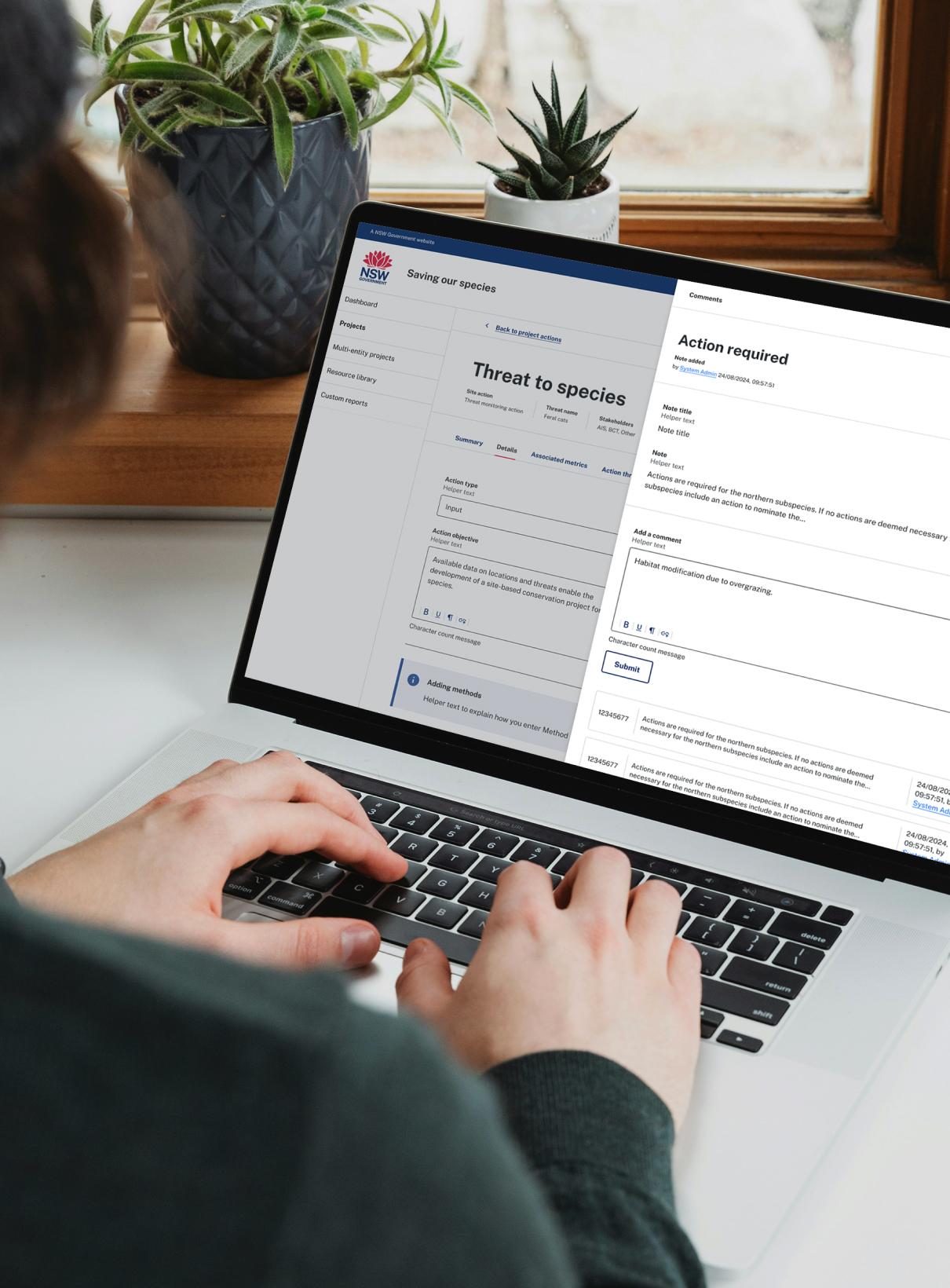
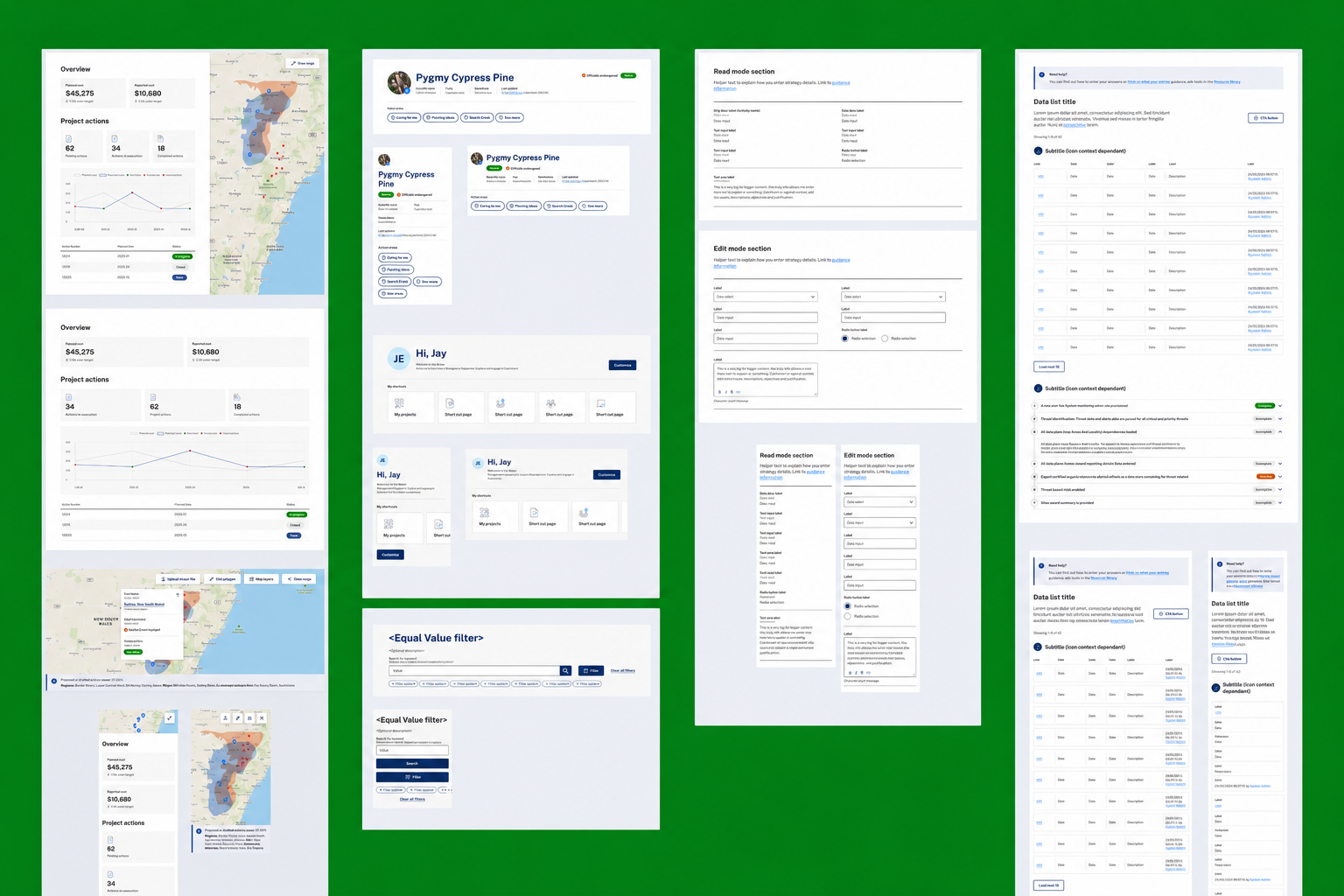
We introduced structured forms, clearer guidance and repeatable patterns to make information easier to enter, understand and review consistently.
Simpler workflows
We reduced unnecessary back-and-forth and created clearer pathways through planning, editing and reporting tasks.
Working with the lead UI designer, I helped develop a new review and edit model that made it easier to update information in context rather than moving repeatedly between different parts of the application.
Greater visibility
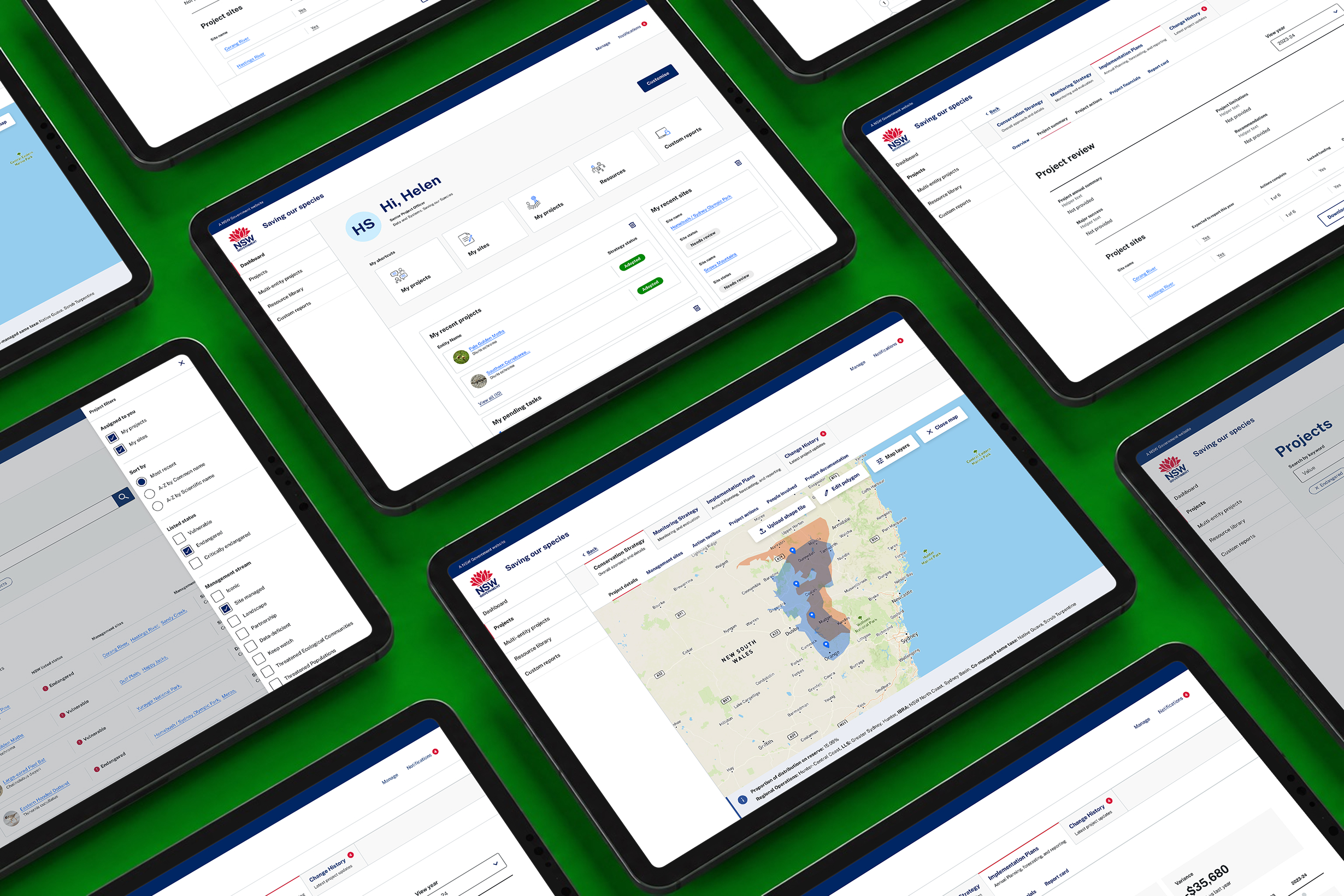
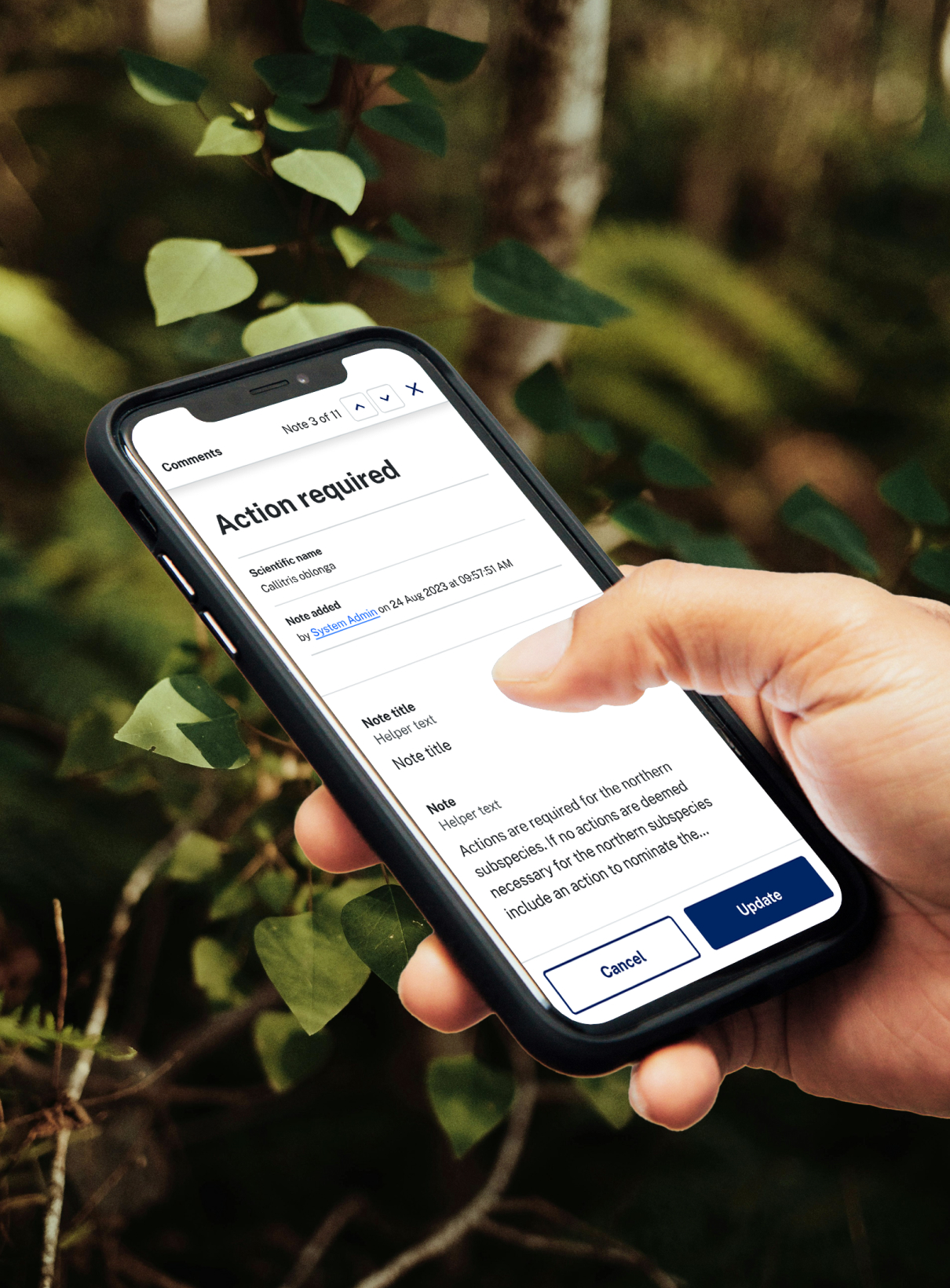
Clearer project status, task notifications, connected information and map-based views helped users understand individual projects within the context of the wider conservation program.
Designed for different ways of working
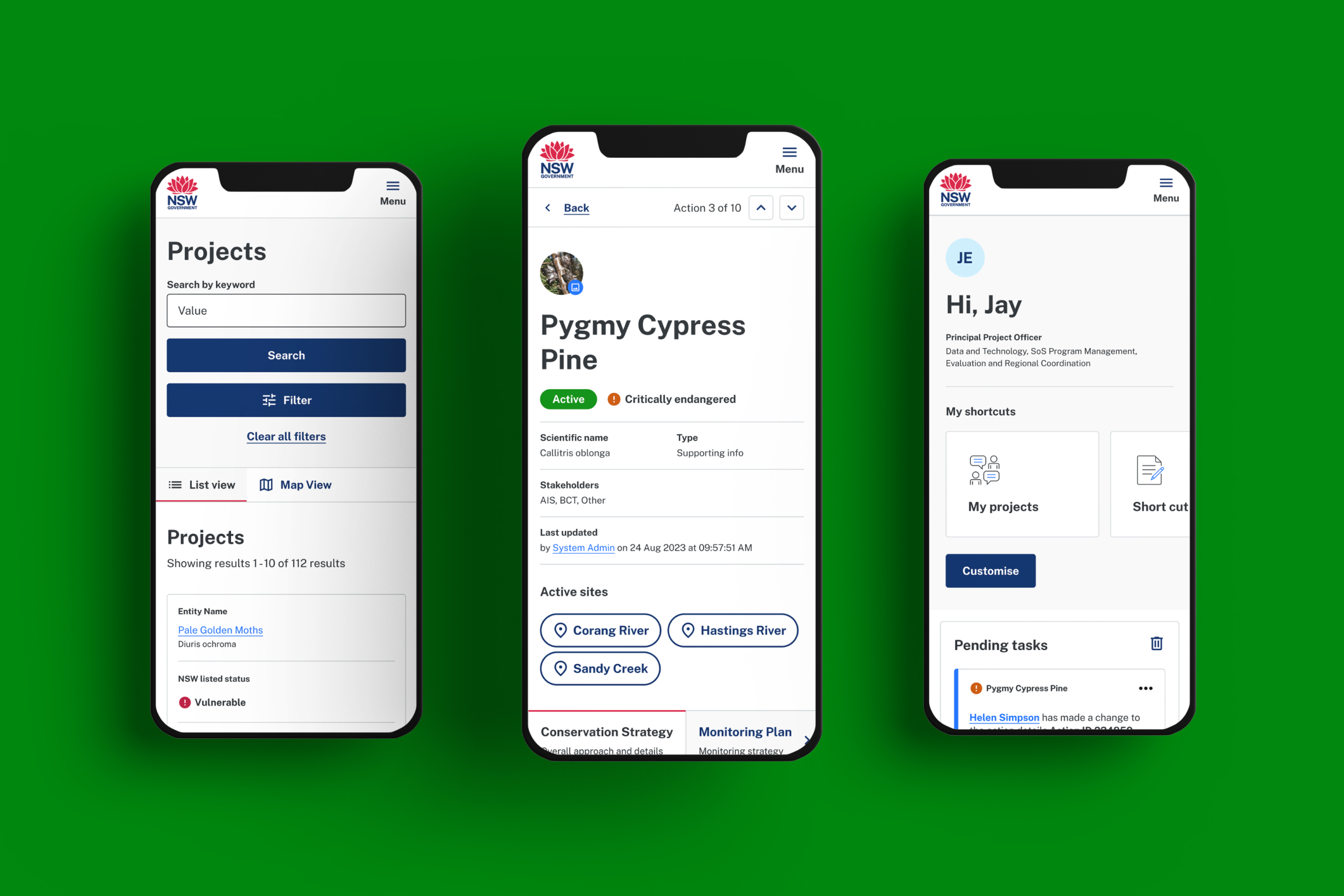
The product needed to work for people using it daily as well as field staff who might only return for annual planning and reporting. Responsive patterns also created the opportunity for teams to access and report information while working in the field.
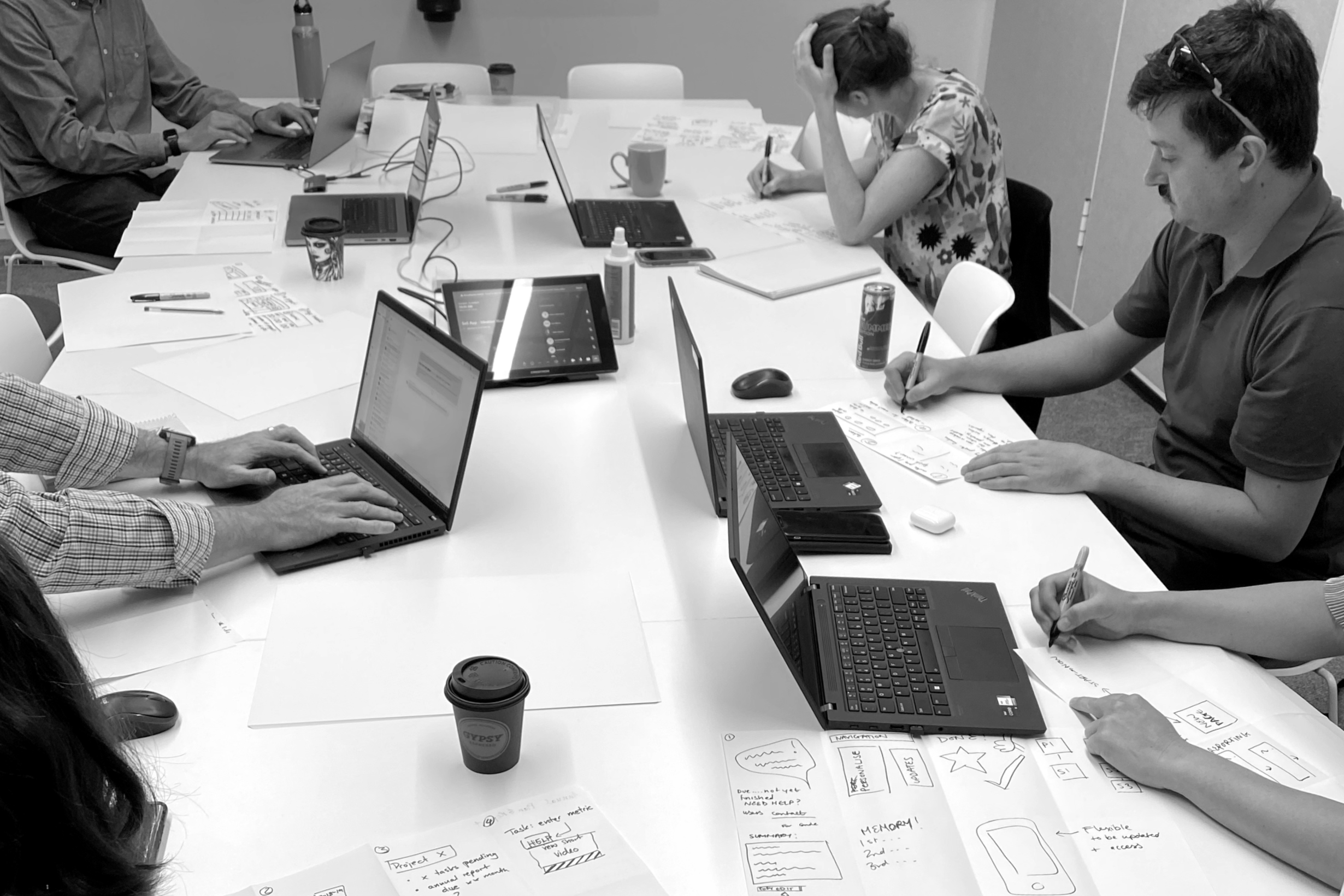
Collaboratively exploring and shaping new product features
Designing, testing and adapting
Legacy technology and backend processes were a significant constraint. I facilitated technical discovery with DCCEEW and our development partners to understand where we could transform the experience and where existing systems meant we needed to adapt.
Moving quickly into high-fidelity Figma prototypes, we used the NSW Government Design System as a foundation and extended it with additional patterns needed for an authenticated product.
We ran two rounds of user testing with users across different roles, experience levels and usage patterns. Testing validated the overall direction while helping us refine details such as terminology, contextual guidance and making navigation within sections more prominent.
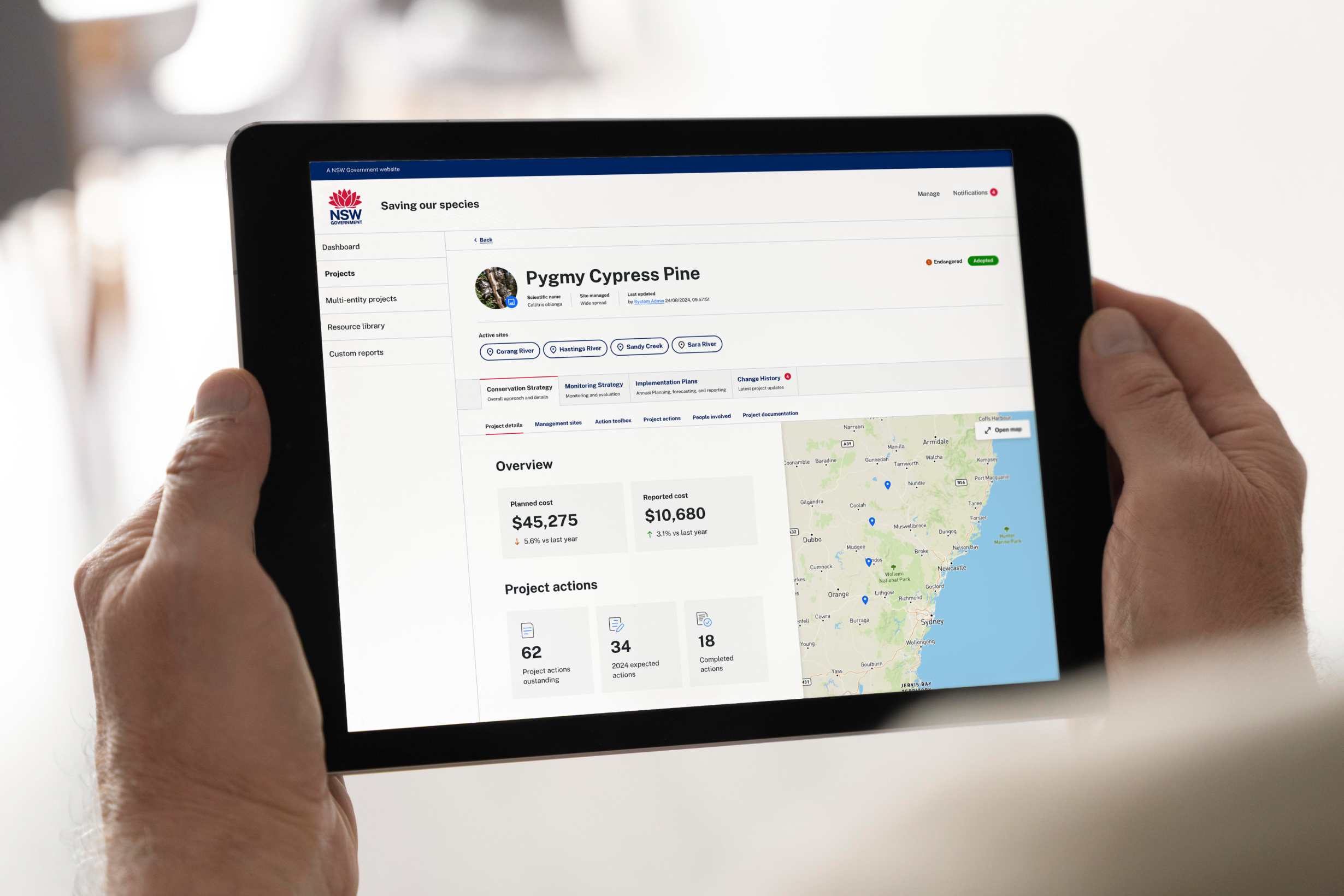
From fragmented processes to a clearer conservation product
Across Discovery and Define, the project involved 80 people across program teams, field users, administrators and other stakeholders. The result was not just a cleaner interface, but a clearer way of structuring the work behind it – with more consistent reporting, simpler workflows and greater visibility across the program. The validated design progressed into a working front-end product, giving DCCEEW a strong foundation for implementation.
80 people consulted
Across Discovery and Define.
32 IA tree tests
Used to validate and refine the new product structure.
2 rounds of user testing
Testing with users across different roles, experience levels and usage patterns.
“I love it. I can see what I did last year, and even helps you to remember what you've written last year or you've forgotten what needs to go in there. It's handy to look back, even to how you wrote it.”
Regional threatened species project officer
More work


